True sovereignty is the ability to govern your own body and mind
What is Kama Dharma?
Kama Dharma is a spiritual and philosophical tradition rooted in ancient wisdom. It weaves together elements of Vedic, Hindu Tantric, Buddhist Tantric, and Indigenous/Animist lineages.
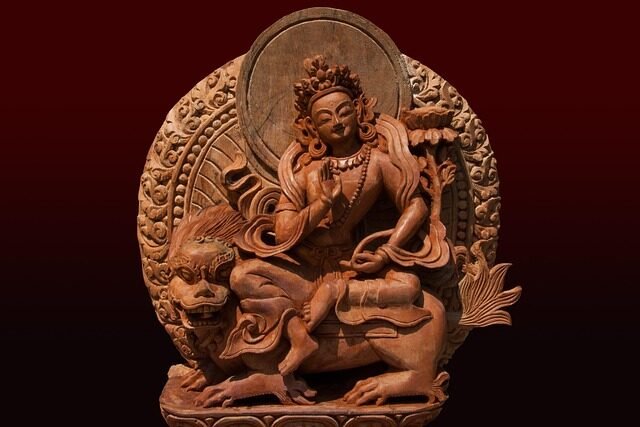
At its heart, Kama Dharma honors the Mother Goddess, known as Kamakhya, whose sacred center is Nilachal Parbat in Assam, India.
Practitioners of Kama Dharma, called Kamarupis, view the Earth itself as the living body of the Goddess. Kamakhya is understood as the sacred source of creation—the physical womb of the planet—representing the origin of life, renewal, and transformation.
In Kama Dharma, the word “Kama” does not simply mean desire in the modern sense. Instead, it is reclaimed in its original Tantric meaning:
Kama is the creative force of existence—the first spark from which the universe arises.
What is the Church of the Mother Goddess?
The Church of the Mother Goddess is a global spiritual organization dedicated to:
- Reviving and sharing the teachings of Kama Dharma
- Preserving the cultural and spiritual heritage of the ancient Kamarupi civilization
- Supporting indigenous communities in Kamarupa and around the world
The Church works within modern legal and constitutional systems to empower communities through:
- The revival of sacred languages
- The preservation of traditional arts and spiritual practices
- The protection and conservation of sacred lands
Its mission is both spiritual and practical—honoring ancient traditions while engaging responsibly with the modern world.
What is Sadhana?
Sadhana is a structured and disciplined spiritual practice designed to transform awareness and deepen self-realization.
In Kama Dharma, Sadhana is not just about belief or philosophy. It is a practical spiritual “technology”—a lived path that uses:
- The physical body
- Daily discipline
- Conscious action and intention
Through Sadhana, practitioners seek to realize their inherent unity with the Mother Goddess.
Rather than escaping the world, Kama Dharma embraces life itself as the path to liberation.
Who is the Dikshita of Kamarupa Kaula?
The founder and initiator (Dikshita) of Kama Dharma is Rishi Saunam of Assam.
Rishi Saunam comes from a traditional lineage of Kamarupi Shakta Tantra practitioners. He was initiated into Dharma at the age of twelve by his father, who was also his spiritual teacher.
He is a Grihastha (householder), meaning he follows a spiritual path while fully engaged in family and worldly life. Educated in both India and the United States, he has also spent over twenty years as an organic tea farmer, manufacturer, and blender.
His life reflects the core teaching of Kama Dharma: spirituality lived fully, not withdrawn from the world.
What is Moksha?
Moksha means liberation.
In its simplest sense, Moksha is freedom from Samsara—the endless cycle of birth, death, and rebirth.
Here is how Kama Dharma understands this journey:
- Karma: Every action has consequences that shape our experience of life
- Rebirth: Until liberation is attained, the soul continues to be reborn according to its accumulated karma
- Moksha: Liberation marks the end of this cycle and the realization of one’s true nature, free from suffering and limitation
Moksha is not an escape from existence, but a return to our deepest truth.
Interested to join the Kaula/Dharma community? Click here to review the Seven Vows of the Jigyasu
Support the Work at Lohitas Lifestyle